
On March 15, 2006, Ann and I met for the first time in her studio in Taos. The studio exuded a wild exuberance of oil, acrylic and water color paintings as well as sculptures she had just begun to create from small tree sticks and tissue paper. She told me that the sculptures represented her hands but they appeared to be so fragile I didn’t get near them. Also, I don’t know why I never thought of taking any photographs of either the studio or Ann. Now, of course, I wish I had.
Recent health challenges had placed boundaries on Ann’s otherwise boundless art spirit, frustrating her with fatigue. “All these health problems have hit me within the last year because I think I’m 26. I can’t whip my body into shape.” She was 86 at the time.
Ann described her art as a response to her sensitivity to the world’s beauty which fueled her theory of “integration and disintegration.” When she began to study art at the Kansas City Art Institute when she was 55 years old, she discovered sumi, an ancient Chinese painting technique that she uses to add spontaneity and freshness to her canvases. Sumi artists devote their entire lives to studying one subject, practicing until their technique is forgotten and they can paint without thinking. Ann studied the human figure and “painted as the spirit came through the artist onto paper.”

I asked Ann about the source of her exuberance and she responded:
Pain. Pain is absolutely essential. You are not a whole human being unless you have experienced the depths. And then, you are also able to experience the heights.
Another excerpt from our conversation:
SHARON: Gloria Naylor, who wrote The Women of Brewster Place, said, “The closer you stay to home, the better your chances of touching the universal.”
SAINT: That’s where you find the universal. Right in yourself. But you do have to look around you and have lots of experiences. Not be afraid to taste this and taste that.
SHARON: The biggest thing that paralyzes me is fear.
SAINT: Oh, me, too.
SHARON: How do you get over it?
SAINT: I don’t think I’ll ever get over it. Are you kidding?
SHARON: How do you move through that fear?
SAINT: I don’t feel fear when I come out here to the studio.

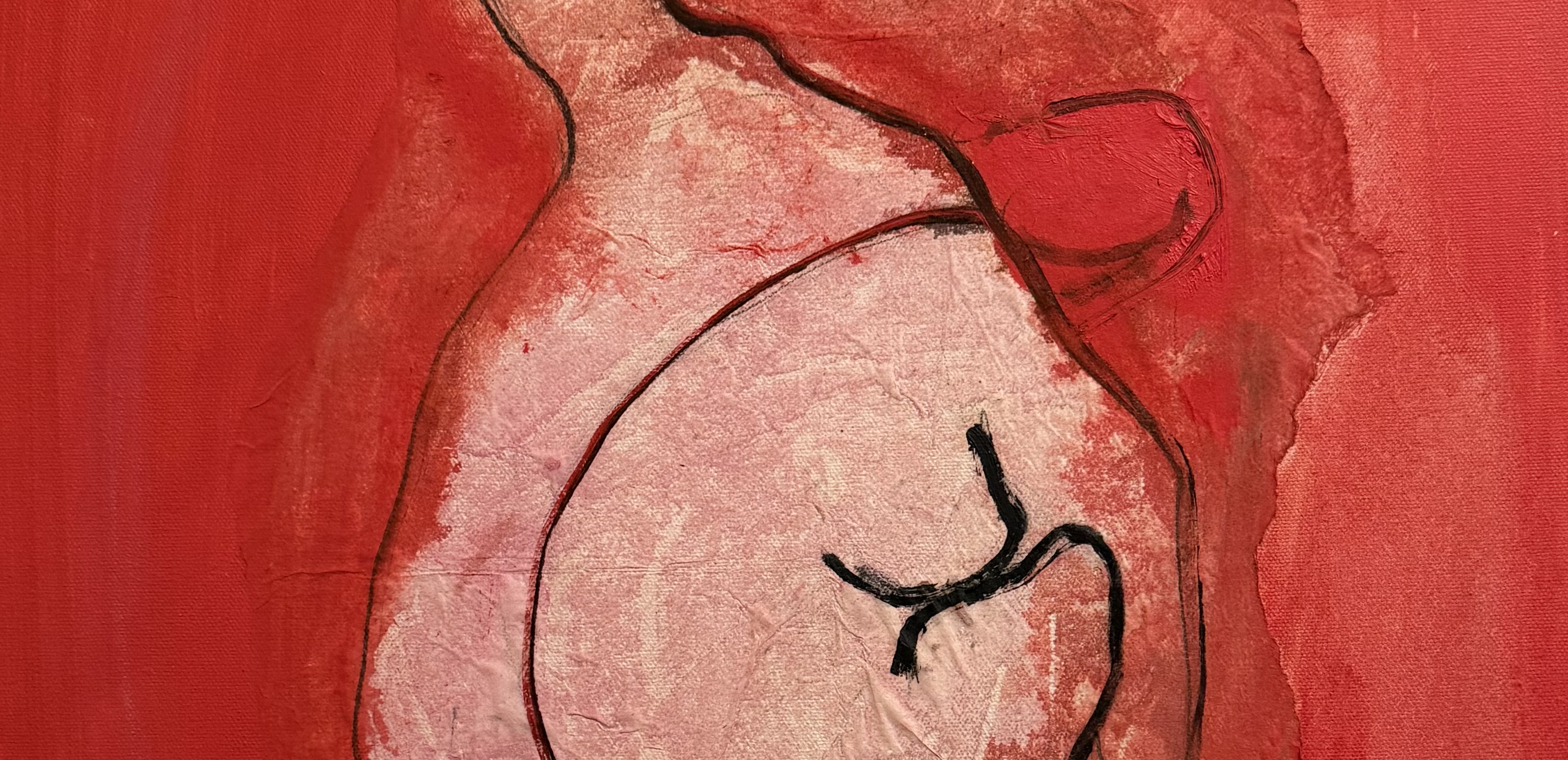
The above painting was featured in an exhibition at the Harwood Museum of Art in Taos. Accompanying the painting was this description from Ann:
My paintings are a process of integration and disintegration, which is also part of my spiritual life. The universe integrates and disintegrates, and we’re part of that. It’s important to suffer because the light is much brighter on the other side.
I had purchased this painting in 2008, and I can still feel how my cheeks flushed when I read beneath the painting, “From the private collection of Sharon J. Anderson.” I may not have painted this work, but the spirit of the artist clearly had come through to me.
TOMORROW: Some final thoughts from my inspiring, wise and ageless Saint.
All paintings in this post are part of my private art collection.


5 responses to “My Wise Saint”
Again, all apologies for my notification scheduling mistake. I’m particularly irked with myself because it was for one of the posts about a topic that means much to me.
Compared to the Hawley paintings I included in yesterday’s post, the paintings in today’s post are much “lighter”. I didn’t really notice the difference until working on this post. Perhaps life was getting less “dark.”
Received a lovely email from my beloved, Christiana:
“Really enjoying this series on your saint and your relationship to her … her technique, her words … will you be writing about your relationship to the pieces themselves?”
I think that is a very good question. I DO need to write about my relationship with these Hawley pieces as well as the rest of my art collection.
Your matron saint of art is a perfect example of what I learned in reading “Your Brain on Art” by Susan Magsamen & Ivy Ross. Creating is essential to aging gracefully and well, mind, body & spirit!
Thank you for sharing your collection with us!
Thank you, dear Beth. And also for gifting me with “Your Brain on Heart” which I read during my rat infestation. It helped me to survive in more ways than one!